Ethiopia is actively reversing a century of severe deforestation through ambitious large-scale reforestation.Under the Green Legacy Initiative, launched in 2019 by Prime Minister Abiy Ahmed, the country has mobilized millions of citizens each year to plant billions of seedlings nationwide. Since the program's start, more than 32–40 billion seedlings have been planted (with official sources varying slightly in cumulative figures), countering the dramatic loss of nearly all original forest cover—estimated at over 95–98% decline over recent decades due to agriculture, fuelwood needs, and other pressures.The initiative has expanded forest and tree cover significantly, while also establishing dedicated funding mechanisms, such as the 2024 Green Legacy and Landscape Restoration Special Fund (allocating 0.5–1% of federal revenue annually). Annual targets remain high: for 2025, the goal was 7.5 billion seedlings, with ongoing efforts building toward even larger cumulative objectives in the coming years.Beyond ecological restoration, the program drives socioeconomic benefits by creating hundreds of thousands of green jobs—particularly in nurseries, seedling production, and land management—many going to women and youth. It enhances biodiversity, boosts soil health and water retention, strengthens agricultural resilience against drought and climate impacts, and supports long-term food security.This community-driven, government-backed effort has positioned Ethiopia as a standout example of bold climate action and landscape restoration in Africa and beyond, inspiring similar initiatives while demonstrating how national mobilization can deliver both environmental and human development gains.Did you know? 🎓
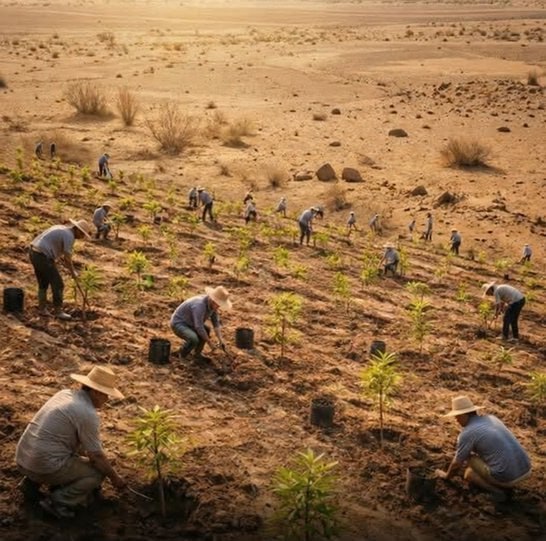
Ethiopia is actively reversing a century of severe deforestation through ambitious large-scale reforestation.Under the Green Legacy Initiative, launched in 2019 by Prime Minister Abiy Ahmed, the country has mobilized millions of citizens each year to plant billions of seedlings nationwide. Since the program's start, more than 32–40 billion seedlings have been planted (with official sources varying slightly in cumulative figures), countering the dramatic loss of nearly all original forest cover—estimated at over 95–98% decline over recent decades due to agriculture, fuelwood needs, and other pressures.The initiative has expanded forest and tree cover significantly, while also establishing dedicated funding mechanisms, such as the 2024 Green Legacy and Landscape Restoration Special Fund (allocating 0.5–1% of federal revenue annually). Annual targets remain high: for 2025, the goal was 7.5 billion seedlings, with ongoing efforts building toward even larger cumulative objectives in the coming years.Beyond ecological restoration, the program drives socioeconomic benefits by creating hundreds of thousands of green jobs—particularly in nurseries, seedling production, and land management—many going to women and youth. It enhances biodiversity, boosts soil health and water retention, strengthens agricultural resilience against drought and climate impacts, and supports long-term food security.This community-driven, government-backed effort has positioned Ethiopia as a standout example of bold climate action and landscape restoration in Africa and beyond, inspiring similar initiatives while demonstrating how national mobilization can deliver both environmental and human development gains.Did you know? 🎓
Comments
Be the first comment