A massive nuclear waste tomb in the Pacific is beginning to crack and leak.The Runit Dome, constructed in the late 1970s on a remote island in the Marshall Islands, was built to contain over 120,000 tons of radioactive debris left behind by U.S. nuclear testing. Among the waste is plutonium-239, a highly dangerous isotope that remains radioactive for more than 24,000 years.The dome stretches roughly 377 feet (115 meters) across and was never properly sealed at the base. Instead, it rests directly on porous coral, allowing groundwater to flow freely beneath it.Now, rising sea levels and increasingly powerful storms are stressing the structure. Cracks have formed in the concrete, and scientists have already detected elevated radiation levels in the surrounding soil and water.While the current leaks are still considered relatively minor, experts warn that as oceans continue to rise, the risk of a much larger release will grow.Built as a temporary fix decades ago, the Runit Dome now stands as a stark reminder: the radioactive waste sealed inside it will remain hazardous long after our civilizations are gone.Science and facts💡
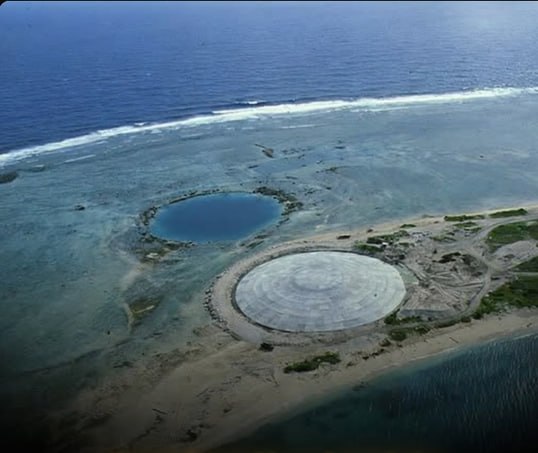
A massive nuclear waste tomb in the Pacific is beginning to crack and leak.The Runit Dome, constructed in the late 1970s on a remote island in the Marshall Islands, was built to contain over 120,000 tons of radioactive debris left behind by U.S. nuclear testing. Among the waste is plutonium-239, a highly dangerous isotope that remains radioactive for more than 24,000 years.The dome stretches roughly 377 feet (115 meters) across and was never properly sealed at the base. Instead, it rests directly on porous coral, allowing groundwater to flow freely beneath it.Now, rising sea levels and increasingly powerful storms are stressing the structure. Cracks have formed in the concrete, and scientists have already detected elevated radiation levels in the surrounding soil and water.While the current leaks are still considered relatively minor, experts warn that as oceans continue to rise, the risk of a much larger release will grow.Built as a temporary fix decades ago, the Runit Dome now stands as a stark reminder: the radioactive waste sealed inside it will remain hazardous long after our civilizations are gone.Science and facts💡
Comments
Be the first comment